Which Outdoor Shade Options Hold Up Best in Texas Weather?
Texas doesn't do mild weather. Summers bring months of triple digit heat and intense UV exposure, spring and fall bring high winds and sudden storms, and everything in between puts real stress on outdoor structures. If you're investing in shade for a business, HOA, church, or public space, the structure needs to survive all of it, not just look good on install day.
Here's a breakdown of the shade options that actually hold up long term in Texas conditions, and what to look for in an installer.
What Texas Weather Actually Tests
Before comparing structure types, it helps to know what you're designing against:
UV exposure. Texas gets some of the highest UV index readings in the country for most of the year. Cheap fabrics degrade fast under this kind of sun.
Wind loads. Gulf Coast storms and spring wind events can generate serious uplift forces on any structure that isn't properly engineered and anchored.
Heat cycling. Materials that expand and contract repeatedly in extreme heat are more prone to cracking, warping, or loosening at connection points over time.
Sudden, heavy rain. Structures need proper tensioning, or the fabric will pool water and sag.
A shade structure that isn't built with these four factors in mind will underperform, regardless of how it looks initially.
Shade Sails
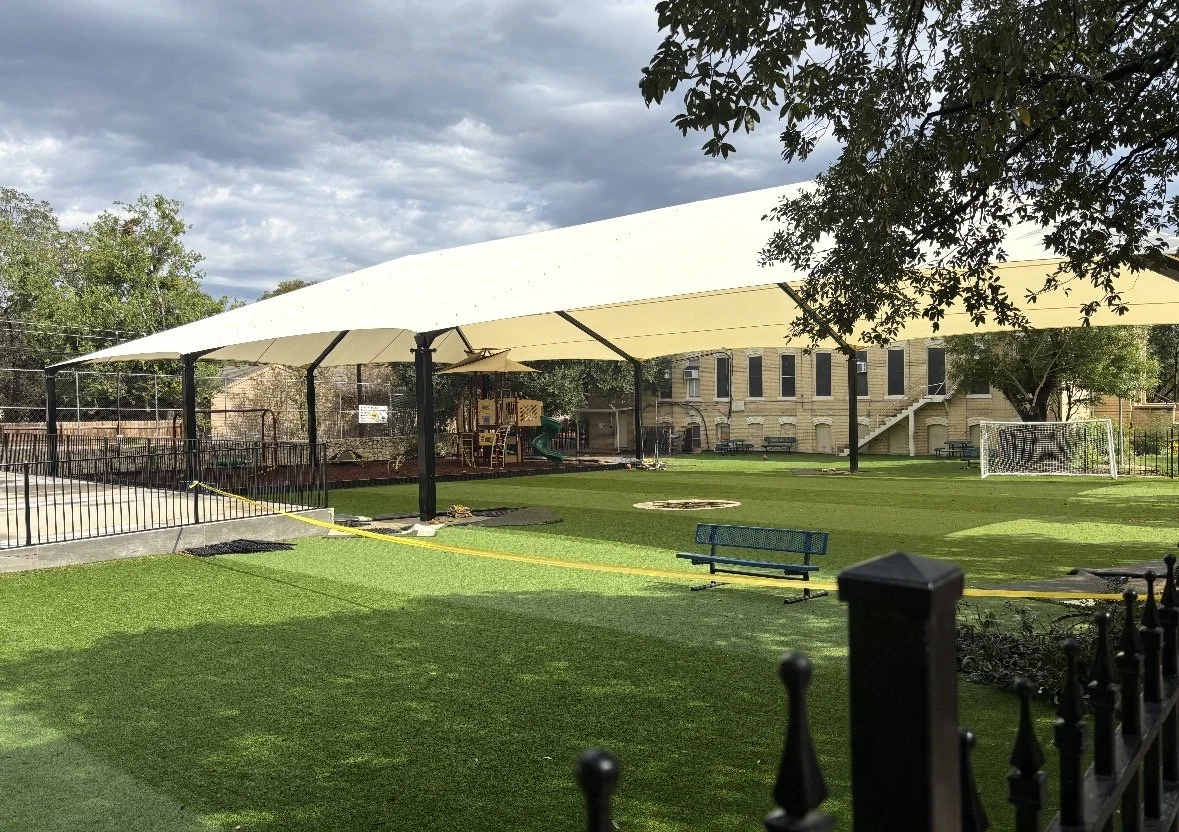
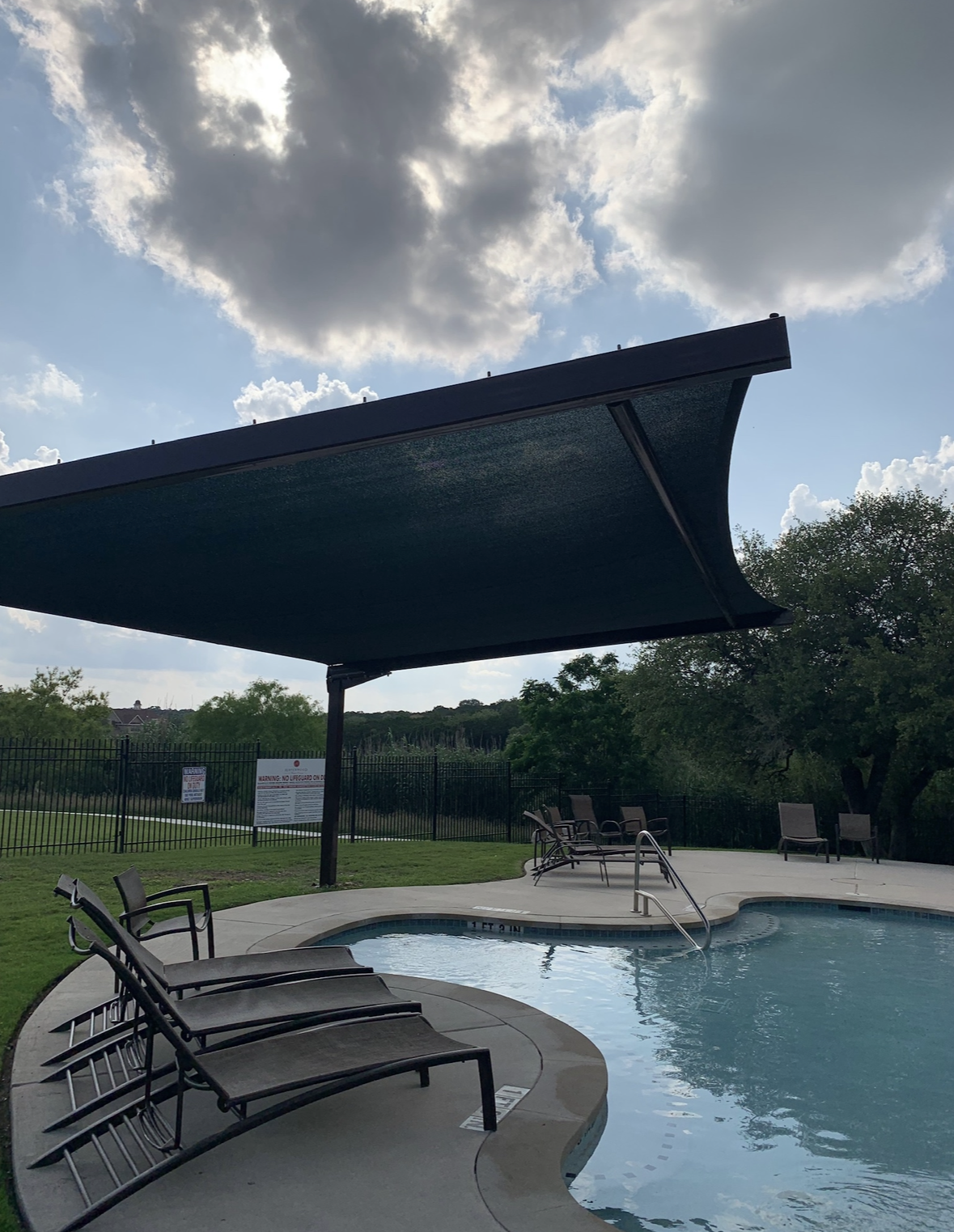
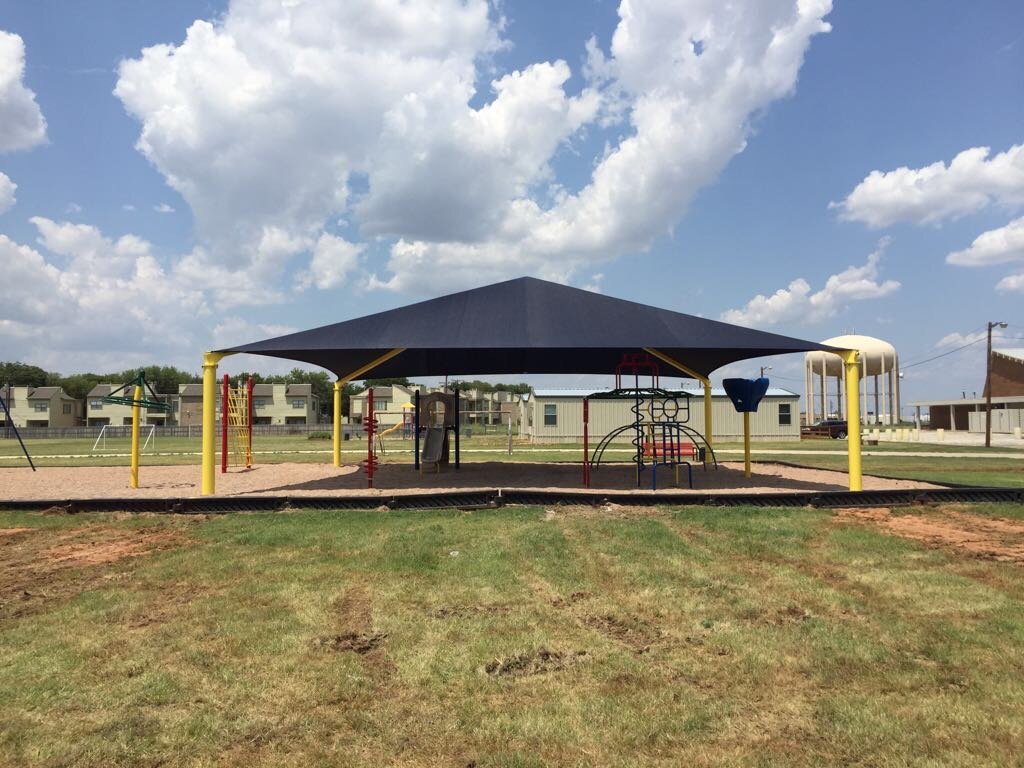
Well engineered shade sails are one of the most effective options for Texas heat. Tensioned fabric panels anchored to steel columns make this the most efficient way to cover a wide open area like a pool deck or playground.
What holds up:
High density knitted commercial shade fabric built to block up to 98.8% of harmful UV rays, not standard patio umbrella fabric
A breathable knit that reduces wind load on the structure while still cutting heat below
Stainless steel hardware at every connection point, including turnbuckles, shackles, and cable, the same materials used in industrial rigging
A cable tensioning system that keeps the fabric taut and properly shaped without sagging or shifting over time
What fails fast:
Consumer grade sails from big box stores, typically rated for light residential use only
Hardware that corrodes or loosens because it wasn't rated for long term outdoor tensioning
Shade sails are popular for car washes, restaurant patios, and pool decks because they block a high percentage of UV rays while still allowing airflow underneath, which matters a lot when the alternative is trapping heat.
Cantilever Canopies
For sites that need shade without support posts breaking up the usable space underneath, cantilever canopies are usually the better fit. Columns sit on one side only, so the covered area stays completely clear. This is the standard choice for car wash vacuum bays, drive lanes, and anywhere traffic needs to move underneath.
What holds up:
Structural steel posts and connection plates engineered to the specific wind and load requirements of the site
Powder coat or hot dip galvanized finish to resist corrosion over decades
Footings sized correctly for the site's soil conditions, not a one size fits all footing
Because the entire load is carried on one side, the engineering matters even more here than with a standard structure. This is not a category where a generic, non site specific design should be used.
Parking Lot Covers and Walkway Covers
For larger commercial sites, multi bay steel parking covers shade rows of vehicles at once, protecting inventory at dealerships and keeping cars cooler for employees, residents, and customers. Walkway covers extend that same protection along continuous covered runs between buildings, drop off lanes, and parking areas, which is common on school campuses, medical facilities, and apartment communities.
What holds up:
Structural steel frameworks engineered for the specific span and site wind data
Properly welded and inspected connection points, since heat cycling loosens fasteners over time if this isn't accounted for at install
A durable powder coat finish, with custom color matching available to match your property
What Actually Determines Long-Term Durability
Across every structure type, the deciding factor isn't really the category of structure. It's whether the structure was engineered for that specific site, or dropped in as a generic product.
A few things worth asking any installer:
Is this designed to your local wind zone and soil conditions, or is it a standard, off the shelf design?
Is the fabric commercial grade and UV stabilized, with a real UV blockage rating, or a lighter residential grade material?
Is the hardware stainless steel, and is it rated for the actual structure size and load?
What warranty backs the canopy fabric and the steel frame?
Structures that skip site specific engineering tend to look fine for a season or two, then start showing sag, fading, or hardware failure well ahead of schedule.
The Bottom Line
Shade sails, cantilever canopies, parking lot covers, and walkway covers can all perform well in Texas heat, wind, and UV, but only when they're engineered for the specific site rather than treated as a generic product. That's the difference between a structure that needs replacing in a few years and one that holds up for decades.